
لَبَّيْكَ اللَّهُمَّ لَبَّيْك
Ziyarat
Ziyarat Guide: Exploring the Sacred Sites of Makkah and Madinah
Ziyarat is a deeply spiritual journey to the sacred Islamic sites that allows Muslims to strengthen their connection with Allah.
This comprehensive guide highlights the most significant ziyarat locations in Makkah and Madinah, offering valuable historical
background, religious importance, and practical guidance for Saudi Arabia–based pilgrims planning their visit.
Prepared by Islamic scholars with decades of experience in Hajj and Umrah guidance, this guide is based on authentic historical
sources, verified hadiths, and contemporary pilgrimage practices. Each location has been personally visited and carefully studied
by our team to ensure accurate, reliable, and faith-aligned information rooted in authentic Islamic teachings.
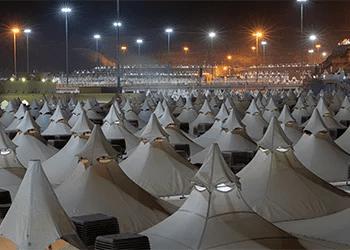
Ziyarat Guide: Exploring the Sacred Sites of Makkah and Madinah
Ziyarat is a deeply spiritual journey to the sacred Islamic sites that allows Muslims to strengthen their connection with Allah.
This comprehensive guide highlights the most significant ziyarat locations in Makkah and Madinah, offering valuable historical
background, religious importance, and practical guidance for Saudi Arabia–based pilgrims planning their visit.
Prepared by Islamic scholars with decades of experience in Hajj and Umrah guidance, this guide is based on authentic historical
sources, verified hadiths, and contemporary pilgrimage practices. Each location has been personally visited and carefully studied
by our team to ensure accurate, reliable, and faith-aligned information rooted in authentic Islamic teachings.
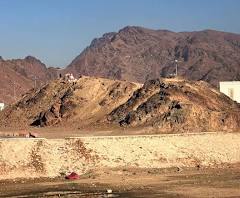
Mount Of Ramah (جبل الرحمة)
Arafa’ or Arafat is a valley outside Makkah and is around 20km. On the 9th of Dhul haj, it is mandatory for all the pilgrims to reach and stay in the valley of Arafa’ and spend the day in making dua’s, doing dhikr and asking Allah (SWT) for forgiveness for all their sins; not doing so can invalidate their hajj.
Jabal ur Rahamah or the Mount of Mercy is a mountain in the valley of Arafat and is about 70m high. The Prophet Mohammed SAW stayed on this mountain and made waqoof. Masjid e Nimra is a beautiful mosque. Two thirds of this mosque lie in the valley of Arafat while one third in the valley of Nimra and the valley of Urana’. The Sermon of Hajj today is delivered in Masjid e Nimra.
Our Prophet (peace and blessings of Allah be on him) delivered the Sermon of Hajj while sitting on his camel (Quswa) in the valley of Urana’.It is mandatory for the pilgrims to offer Qsr and combined prayers of Dhur and Asr after the Sermon of Hajj in or around Masjid e Nimra, and then reach the valley of Arafat and make waqoof there, spending their time in making dua’s, dhikr and asking for forgiveness.
Muzdalifah (مزدلفة)
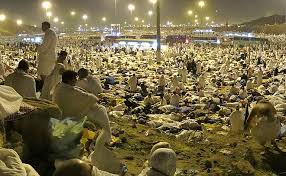
Muzdalifah is located in the province of Makkah. It is mostly a flat land and lies between Mina and Arafat. During hajj, pilgrims travel from Mina to Arafat on the 9th of Dhul Hijjah. They spend the whole day at Arafat and after sunset they leave for Muzdalifah , all the while reciting talbiyah. When pilgrims reach Muzdalifah they perform the Maghrib prayer, they can stay where ever they are. At Muzdalifah, the pilgrims sleep in open air and wake up early for fajr prayer just after Subh’ Sadiq.
There is a hill in Muzdalifah known as “Mashar-ul-Haram”. It also has a mosque built on it. It is masnoon to make dua near Mashar-ul-Haram while facing the Qibla. Nowadays, the starting and ending boundary lines for Muzdalifah have been highlighted clearly so that the pilgrims know the area in which they are required to spend the night and to make duas.
Jamarat (الجمرات)
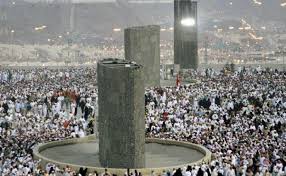
The Jamarat or stoning of the Shaitan (devil) is an important part of Hajj. The Jamarat used to firstly be three tall pillars in Mina, but since 2004, they have been replaced by high walls to avoid any accidents. Also a (one way) bridge has been made to make it easier for the Hujjaj (pilgrims) to pelt the Jamarat either from the bridge or from the ground. The three walls or Jamarat are named ; Jamarah-al-Oola or Jamarah-e-Sughra (meaning the first or the small Jamarah), Jamarah-al-Wusta (meaning the middle Jamarah) and Jamarah-al-Uqbah or Jamarah-al Kubra ( meaning the last or the largest Jamarah).
Hajj is an Ibadah that is a collection of rituals that commemorate the Sunnahs of Ibraheem (AS) and his family. Pelting the Jamarat represents the steadfastness of Ibraheem (AS) and Isma’eel (AS). When Ibraheem (AS) saw a dream for three consecutive nights that he was sacrificing his only son. He knew that as a Prophet, his dreams were true and a form of Wahi (revelation). So he took his son, Isma’eel (AS) along with him. On their way, he told his son about the dream. The son readily agreed to be sacrificed to please Allah.
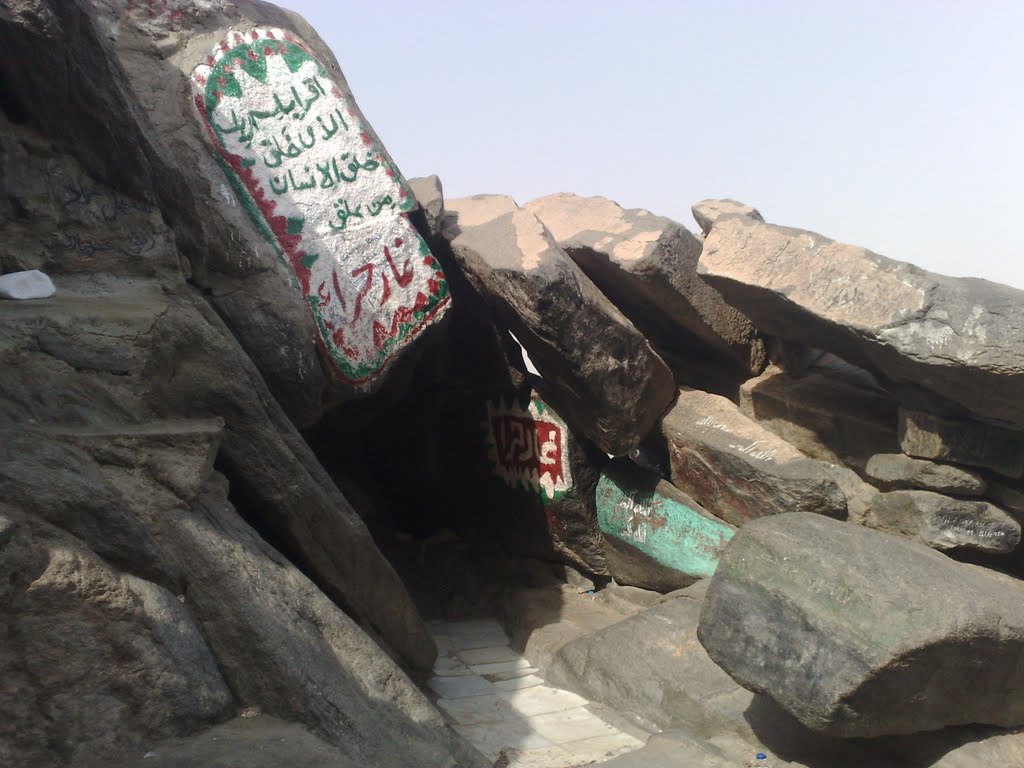
Ghar Thawr (غار ثور)
When the Prophet (SAW) and Abu Bakr (RA) arrived at the cave on Mount Thawr, Abu Bakr (RA) entered first to clear away anything that might injure the Prophet (SAW). He found a few holes and stuffed them with pieces of cloth. The Prophet (s.a.w.) then entered and went to sleep on Abu Bakr(RA)’s lap. Suddenly, something stung Abu Bakr(RA)’s foot, but he did not twitch, fearing he would wake the Prophet (SAW). The pain was so intense that tears began to run down his cheeks and onto the Prophet (SAW)’s face. The Prophet (SAW) woke up and saw that Abu Bakr (RA) was in pain. He applied his spittle on the injury and the pain disappeared.
For three consecutive nights the Prophet (SAW) and Abu Bakr (RA) remained hidden in the cave. During this period, Abu Bakr (RA)’s son, Abdullah, would pass his nights nearby. The young man would return to Makkah very early in the morning so that the Quraysh had no idea that he had slept elsewhere. Each day in Makkah he collected information about the activities of the Quraysh, and each night went back to Jabl Thawr to inform the Prophet (SAW) and his father Abu Bakr (RA).
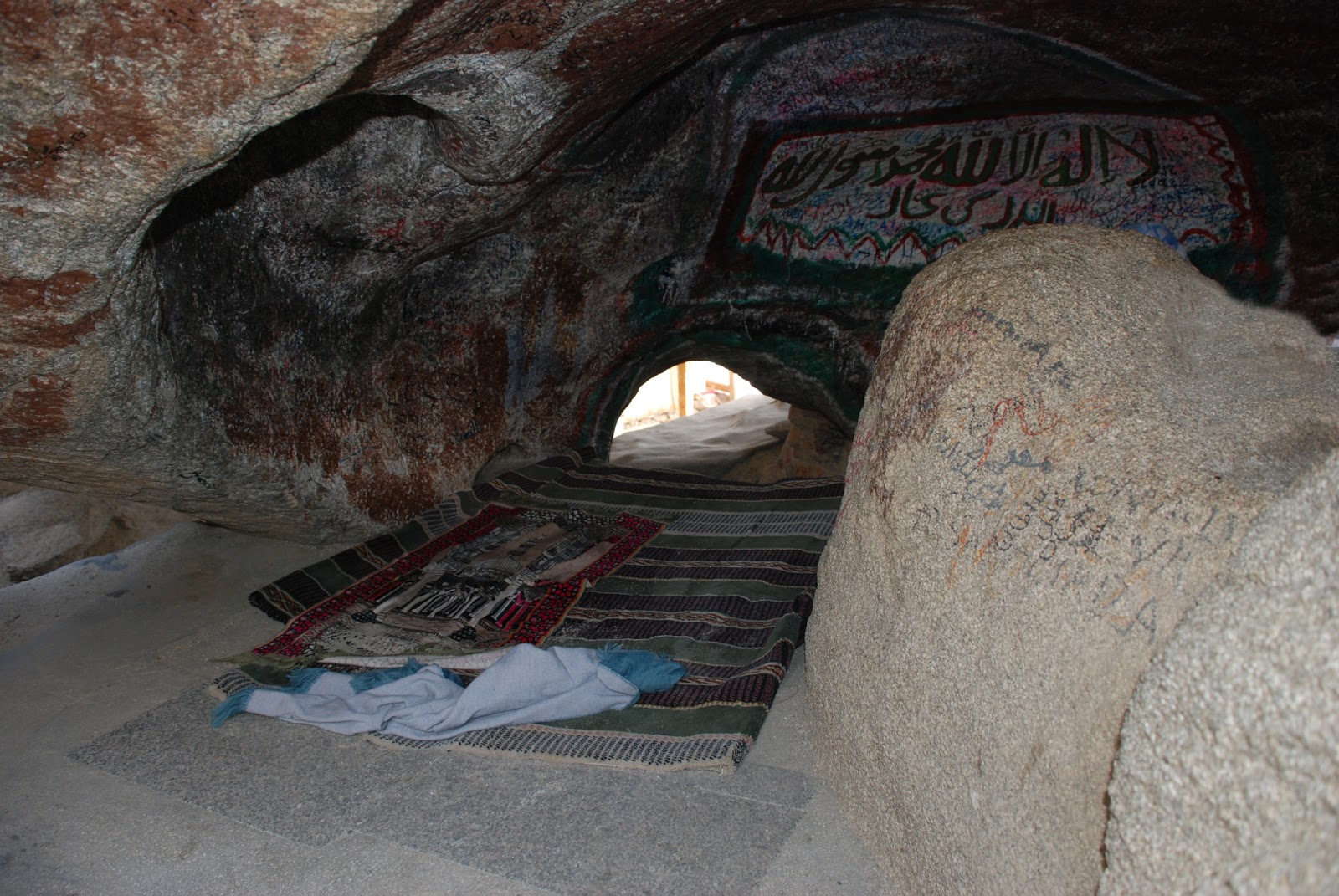
Ghar Hira (غار حراء)
Also known as Mount Jabal Noor (the mountain of light) which lies about two miles from the Kabba. It was here that the Prophet Muhammad (SAW) received the first revelations of the Holy Quran during the month of Ramadan in 610 CE.
The Prophet (SAW) first began to have revelations in the form of good dreams which became true. Then he began to like solitude. He would go to the cave of Hira and meditate there in solitude for a number of days and nights. He would take provisions with him to stay for an extended period, and when he returned to Khadeejah (RA), he would stock up again and go back to the cave. This was his practice until Truth was revealed to him by the will of Allah AWT through an angel while he was in the cave of Hira.
Your Trusted Partner for Umrah & Ziyarat Travel
MoveMe.cab is a reliable travel and transportation service provider specializing in Umrah services, including Ziyarat tours across Makkah, Madinah, and other holy locations. We offer comfortable and affordable rent-a-car services with driver, ensuring a safe, smooth, and hassle-free journey for pilgrims.

Join us on
Copyright © 2026 Moveme.cab. All Rights Reserved.
Terms and Conditions | Privacy Policy